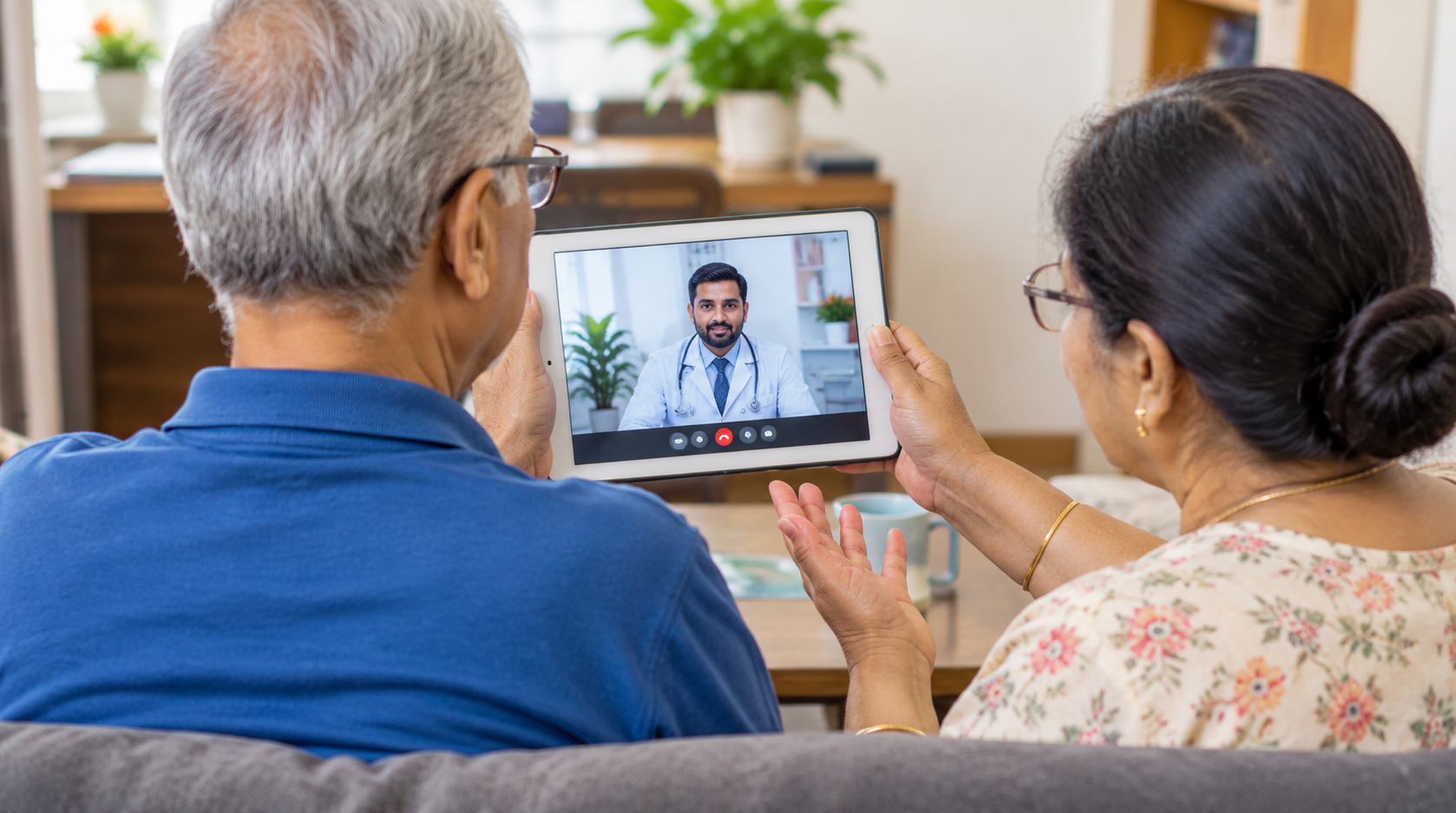

A doctor at home is usually the better option when the patient needs an examination but finds travel difficult, while a clinic visit is better when the patient needs tests, equipment or procedures that only a facility can offer.
Neither is the right choice in an emergency, which needs a hospital straight away.
Both options involve a face-to-face consultation with a qualified doctor. What changes is where it happens, and that shapes the cost, the time involved, the tests available and how comfortable the experience is for the patient. This guide sets out when each choice makes sense, so families can decide based on the patient's actual needs rather than habit.
What Is the Main Difference Between a Doctor at Home and a Clinic Visit?
The main difference is that a doctor visit at home brings the doctor to the patient, while a clinic visit brings the patient to the doctor and the facility's equipment.
The consultation itself, a history, an examination and advice, is broadly the same.
A clinic has on-site resources: diagnostic equipment, a laboratory or imaging centre nearby, and quick access to specialists. A home visit has the advantage of context. The doctor sees the patient in their real surroundings, with their medicines, their routine and their family around them.
When Is a Doctor at Home the Better Option?
A doctor at home is often the better option when getting to a clinic would be difficult, exhausting or risky for the patient.
Typical situations include:
- the patient is elderly, frail or has trouble walking or climbing stairs;
- the patient is bedridden, recovering from a stroke or living with advanced illness;
- the patient has just come home from hospital and needs a check-up;
- the patient has a fever or infection and feels too unwell to travel;
- the patient has dementia or anxiety and becomes distressed in unfamiliar places;
- no family member is free to accompany them to the clinic.
In these cases, the effort and strain of reaching a clinic can outweigh the benefits of its facilities, at least for the first assessment.
When Is a Clinic Visit the Better Option?
A clinic visit is usually better when the patient can travel comfortably and the problem is likely to need equipment, investigations or a procedure on the same day.
Examples include:
- symptoms that may need an X-ray, ultrasound, ECG or other investigation straight away;
- minor procedures such as stitching a cut or draining an abscess;
- consultations with a specialist who works from a hospital or clinic;
- routine check-ups for patients who are mobile and can travel easily;
- situations where cost matters most and the patient can reach a clinic without difficulty.
A clinic visit also suits patients who prefer to combine the consultation with tests in one trip.
How Do the Two Options Compare?
The two options differ most on travel, tests, time with the doctor, cost and comfort.
Looking at each one helps families see which matters most for their situation.
Which Option Involves Less Travel and Effort?
A doctor at home involves far less travel and effort, because the patient does not leave the house.
A clinic visit involves transport, parking, stairs or lifts, and often a family member taking time off work to accompany the patient. We look at these everyday savings more closely in our article on how a doctor visit at home makes medical care more convenient.
Which Option Offers More Tests and Equipment?
A clinic usually offers more, especially one attached to a hospital, where imaging and a wider range of tests are available on the spot.
A doctor at home carries portable equipment and can arrange blood and urine sample collection at home, but imaging still needs a facility.
Which Option Gives More Time With the Doctor?
A home visit is usually less rushed, since a clinic consultation is often shaped by the queue outside.
That extra time can help when a patient has several conditions or struggles to explain their symptoms.
Which Option Costs More?
A doctor home visit generally costs more than a standard clinic consultation, because the doctor's travel time is part of the service.
Families should weigh this against the cost of transport and lost working hours, and ask the provider for a clear fee before booking.
Which Option Is More Comfortable for the Patient?
A home visit is usually more comfortable, because the patient stays in familiar surroundings and avoids a crowded waiting area.
This may matter most for someone with low immunity, or for a patient who becomes anxious in unfamiliar places.
What If It Is an Emergency?
In an emergency, neither a home visit nor a routine clinic appointment is right: the patient needs a hospital emergency department immediately.
Call 112 or 108 for an ambulance.
Chest pain, severe breathlessness, sudden weakness or numbness on one side, slurred speech, fainting, heavy bleeding and sudden severe pain are among the warning signs listed in the US National Library of Medicine's guide to recognising medical emergencies. Waiting for a scheduled visit in these situations can be dangerous.
How Can Families Decide Between a Doctor at Home and a Clinic?
Families can decide by asking three questions: can the patient travel safely and comfortably, is the problem likely to need tests or equipment today, and is this an emergency?
- If it may be an emergency, call an ambulance.
- If the patient cannot travel easily, start with a doctor at home. The doctor can decide whether a clinic or hospital visit is needed next.
- If the patient can travel and likely needs tests or a procedure, a clinic visit may save a step.
- If the issue is a routine follow-up or a report discussion, an online consultation may also work, as covered in our guide to home visits vs. online consultations.
Many families end up using both. A doctor at home handles assessments and regular reviews, while the clinic is used for scans, specialist opinions and procedures. This mix fits the World Health Organization's idea of integrated, people-centred care, where services are organised around the person's needs. To understand what the doctor does once they arrive, see our breakdown of the services included in a doctor home visit.
Which Related Guides Can Help You Decide?
Our complete guide to doctor visits at home explains the basics, and three related guides cover what the visit includes, how it makes care more convenient and how it compares with an online consultation.
These guides can help you decide:
- What Is a Doctor Visit at Home? Services, Benefits, and How It Helps Patients Get Medical Care at Home: the complete guide to how home visits work, who they suit and how to book one in Mumbai and Pune.
- What Services Are Included in a Doctor Home Visit?: what the doctor checks, reviews and prescribes during a home visit.
- How Can a Doctor Visit at Home Make Medical Care More Convenient?: how home visits save time and travel and ease the load on family caregivers.
- What Is the Difference Between a Doctor Home Visit and an Online Doctor Consultation?: when a video call is enough and when a patient needs to be examined in person.
Can You Get a Doctor at Home in Mumbai and Pune?
Yes. Ayushya Healthcare Services arranges doctor visits at home in both Mumbai and Pune.
Ayushya can also connect the doctor's advice to further care such as home nursing, elderly care or physiotherapy at home. Families in Mumbai can book a doctor visit at home in Mumbai, and families in Pune can start with Ayushya's Pune home healthcare page.
Doctor Visit at Home in Mumbai
Home Healthcare Services in Pune
Not sure which option suits your family member? Ayushya's team can talk through the situation with you.
Frequently Asked Questions
Is a doctor at home as good as a clinic visit?
Yes. For most consultations that do not need on-site tests or procedures, a doctor at home can take a history, examine the patient and prescribe treatment. Imaging and procedures still need a facility.
Is a doctor home visit more expensive than a clinic visit?
Yes. Home visits usually cost more because the doctor's travel time is part of the service. Families save on transport and time away from work, so it is worth comparing the full cost.
Can a doctor at home decide if I need to go to hospital?
Yes. One of the main roles of a home visit is to judge whether the patient can be treated at home. If not, the doctor can advise a clinic or hospital visit and explain what to expect.
Should elderly patients always see a doctor at home?
No. A home visit suits older patients who find travel difficult. Those who are mobile may still prefer a clinic, especially when tests are likely on the same day.
Can I combine home visits and clinic visits?
Yes. Many families use home visits for regular reviews and clinic or hospital visits for scans, specialist opinions and procedures. This mix keeps care convenient without losing access to facilities.
Should I wait for a scheduled appointment if symptoms are severe?
No. Severe or sudden symptoms need emergency care. Call 112 or 108 for an ambulance.