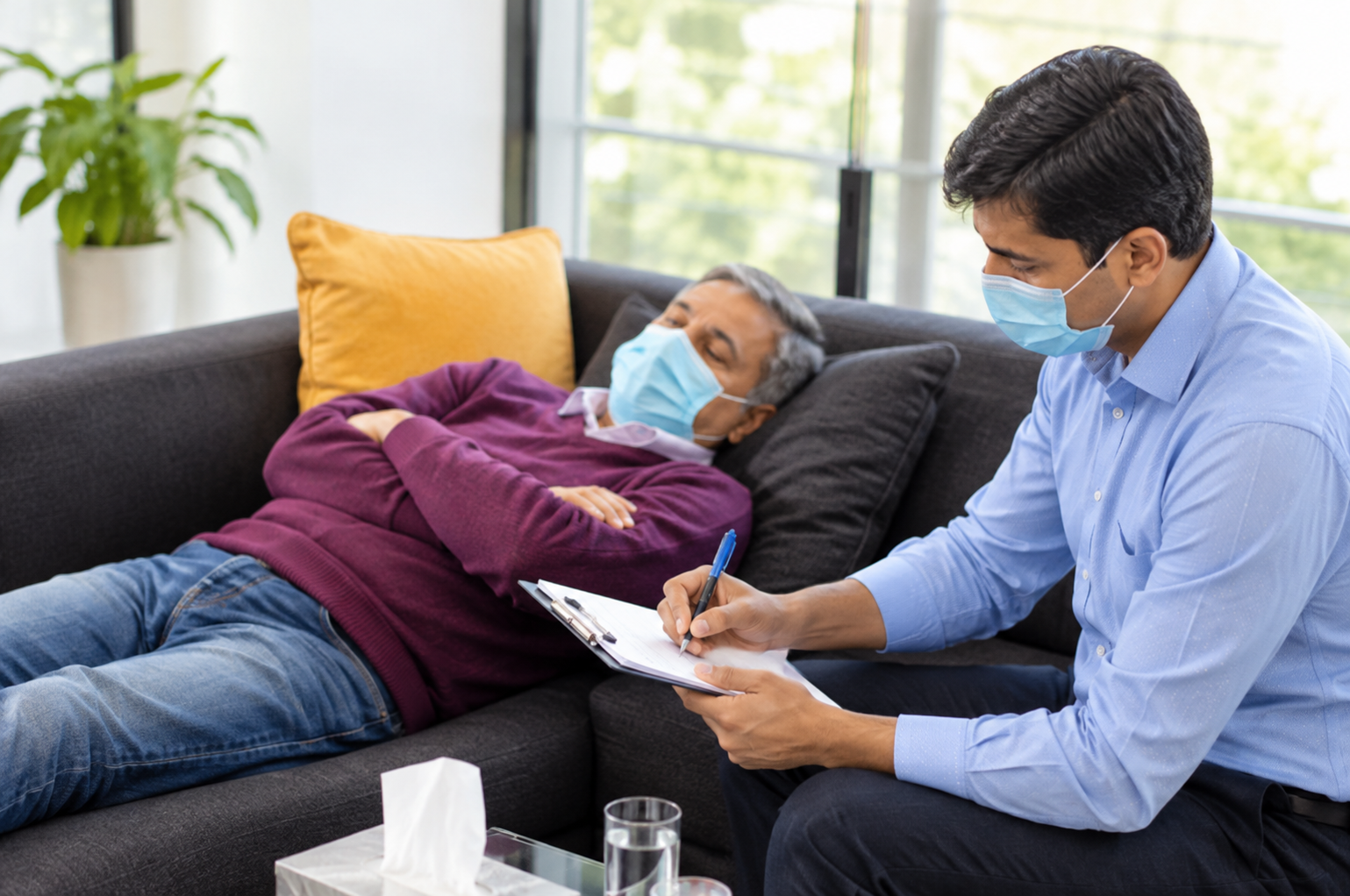
A doctor home visit usually includes a discussion of the patient's symptoms and history, a physical examination with vital-sign checks, a review of current medicines and reports, and a diagnosis or working assessment with treatment advice.
Depending on what the doctor finds, the visit may also lead to a prescription, diagnostic tests, a referral or further care at home.
Families booking a doctor visit at home for the first time often want to know exactly what the doctor will do once they arrive. This guide breaks the consultation down into its parts, explains what each one achieves, and is clear about what a home visit cannot include.
What Happens When the Doctor Arrives?
The visit begins much like a clinic consultation: the doctor introduces themselves, asks why they have been called and listens to the patient and family.
The difference is pace and setting. With the patient in their own bed or chair, there is usually more room for a relaxed conversation.
The doctor will want to know the main complaint, how long it has lasted, what has already been tried, and whether anything similar has happened before. They will also ask about existing conditions, allergies, recent hospital stays and any change in eating, sleep, bowel habits or mood. For an older patient who struggles to explain symptoms, a family member's account is often just as valuable.
What Does the Doctor Check During the Examination?
The doctor usually checks vital signs such as blood pressure, pulse, temperature and oxygen levels, and examines the heart, lungs and any area of concern.
A physical examination is the core of a doctor home visit and the main reason to choose one over a phone or video call. The doctor uses portable equipment to check the body's basic functions and to examine any area of concern.
A typical examination may include:
- checking vital signs: blood pressure, pulse, temperature and breathing rate;
- measuring oxygen saturation with a pulse oximeter;
- checking blood sugar with a glucometer where relevant;
- listening to the heart, lungs and abdomen with a stethoscope;
- examining the throat, ears, skin, joints or a wound, depending on the complaint;
- a basic assessment of movement, balance, alertness and memory in older patients.
The exact checks depend on the patient's condition and the doctor's judgement. Not every visit needs every check, and some patients will need further tests to confirm what the examination suggests.
Does the Doctor Review Medicines and Reports at Home?
Yes. The doctor reviews the patient's current medicines, prescriptions, test reports and discharge summary to check that the treatment is safe and working.
A careful review of the patient's medicines is one of the most useful parts of a home visit, especially for older people taking several medicines at once. At home, the doctor can see the actual strips and bottles rather than relying on memory.
The doctor may check whether medicines are being taken at the right dose and time, whether two prescriptions overlap, whether an old medicine should have been stopped, and whether side effects could explain new symptoms. The World Health Organization's report on medication safety in polypharmacy highlights why reviewing multiple medicines matters for patient safety.
Reports, scans and discharge summaries are reviewed in the same sitting, so the doctor can see the full picture before deciding on any change. Families should not stop or change a prescribed medicine on their own; any change should come from the doctor.
Will the Doctor Give a Diagnosis and Prescription at Home?
Yes. After the examination, the doctor explains their assessment and can write a new prescription or adjust existing medicines.
This may be a clear diagnosis, such as a chest infection, or a working assessment that needs tests to confirm.
Treatment advice can include a new prescription, changes to existing medicines, advice on diet, fluids and rest, and instructions on which symptoms to watch for. A good consultation ends with the family knowing what to do, what to expect over the next few days and when to call the doctor again.
Can the Doctor Order Tests or Refer to a Specialist From Home?
Yes. The doctor can advise blood, urine and other tests and refer the patient to a specialist, although imaging such as X-rays and scans still needs a facility.
Blood and urine samples can often be collected at home, and Ayushya lists diagnostic tests at home among its services.
Where the problem needs a specialist, such as a cardiologist, neurologist or orthopaedic surgeon, the doctor can refer the patient and explain what the specialist will need to see. When a facility visit makes more sense than further home visits, our comparison of doctor at home and clinic visits can help families weigh the choice.
Can Doctor Home Visits Help Manage Long-Term Conditions?
Yes. Regular home visits let the doctor monitor conditions such as diabetes, hypertension and heart disease and adjust treatment, which may help catch problems earlier.
For patients with diabetes, hypertension, heart disease, chronic lung disease or kidney problems, home visits are often less about a new illness and more about keeping an existing condition under control.
On a follow-up visit, the doctor typically compares readings over time, checks whether the treatment is working, looks for early complications and adjusts the plan. Regular reviews at home can help families notice changes sooner, rather than waiting until the patient is unwell enough to need hospital care.
Is a Doctor Home Visit Useful After a Hospital Discharge?
Yes. A home visit soon after discharge lets the doctor check recovery, review the discharge medicines and decide what support the patient needs at home.
The days after a hospital discharge are a common time for a doctor home visit, and the doctor can also look at any surgical wound.
That support may include home nursing care for dressings and monitoring, injections at home as prescribed, physiotherapy at home to restore movement, or medical equipment on rent such as a hospital bed or oxygen concentrator. When one provider arranges all of these, the doctor's plan is easier to put into action. This joined-up approach is one of the reasons a doctor visit at home can make medical care more convenient for the whole family.
Doctor Visit at Home in Mumbai
What Does a Doctor Home Visit Not Include?
A doctor home visit does not include emergency treatment, imaging, surgery or procedures that need a hospital setting.
Its strength is assessment, treatment planning and ongoing care, not acute intervention.
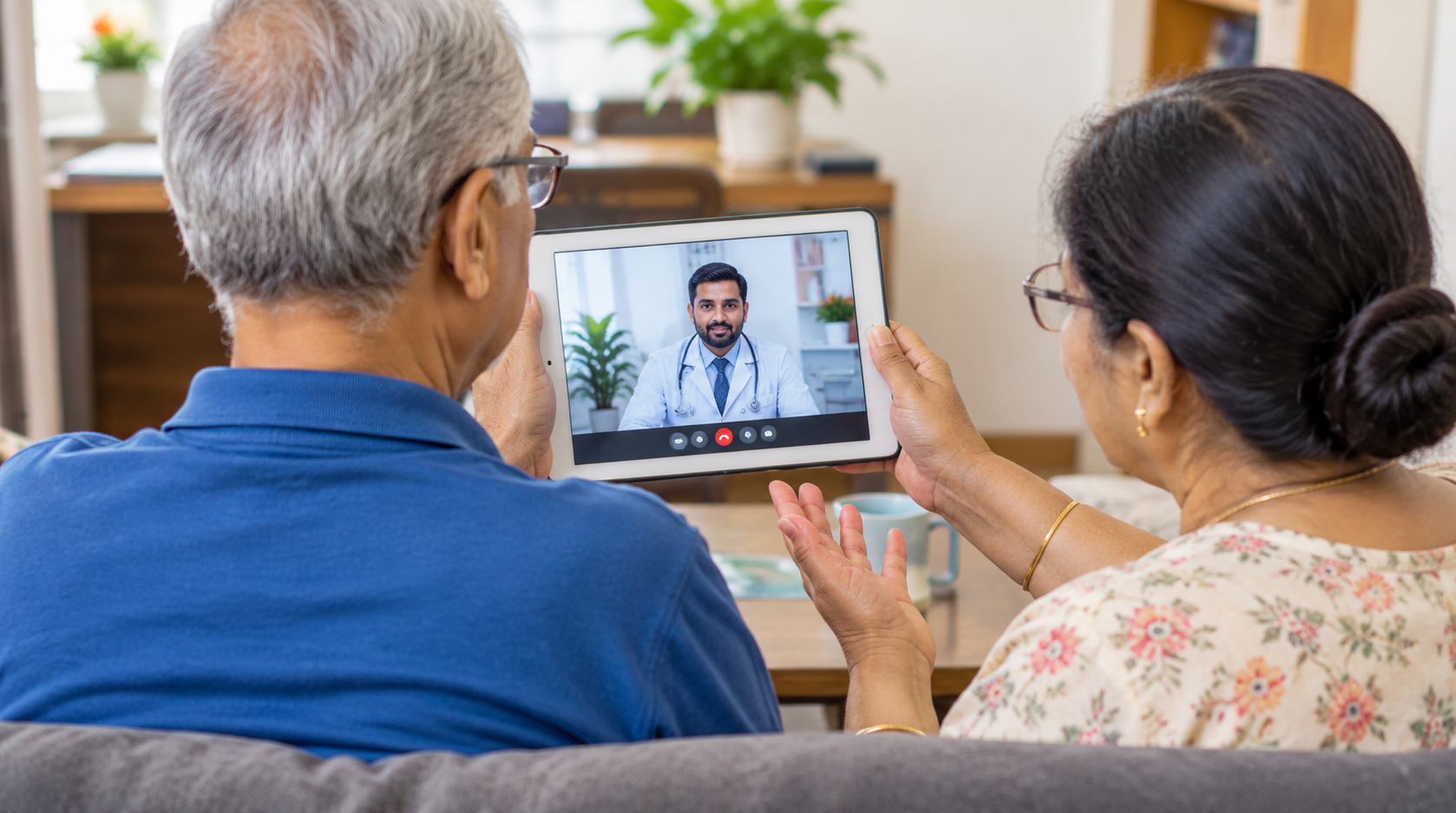
If the patient shows signs such as chest pain, severe breathlessness, sudden weakness, fainting or confusion, the right step is an ambulance on 112 or 108, not a home visit. A home visit also cannot replace regular specialist care where a condition needs it. For quick follow-ups that do not need an examination, an online consultation may be enough, as explained in our guide to doctor home visits vs. online consultations.
What Else Should Families Know About Doctor Visits at Home?
Families can start with our complete guide to doctor visits at home, then read the related guides on choosing between home, clinic and online care and on how home visits make care easier.
These guides complete the picture:
- What Is a Doctor Visit at Home? Services, Benefits, and How It Helps Patients Get Medical Care at Home: the complete guide to how home visits work, who they suit and how to book one in Mumbai and Pune.
- Doctor at Home vs. Clinic Visit: Which Option Is Right for Your Medical Needs?: how to choose between a home visit and a clinic, based on travel, tests, cost and comfort.
- How Can a Doctor Visit at Home Make Medical Care More Convenient?: how home visits save time and travel and ease the load on family caregivers.
- What Is the Difference Between a Doctor Home Visit and an Online Doctor Consultation?: when a video call is enough and when a patient needs to be examined in person.
How Can You Arrange a Doctor Visit at Home in Mumbai or Pune?
You can arrange one through Ayushya Healthcare Services, which provides doctor visits at home in both Mumbai and Pune; call +91 80700 57451 or use the Contact Us page.
Families can book a doctor visit at home in Mumbai or explore Ayushya's home healthcare services in Pune, where the same range of care is available. When booking, share the patient's age, main symptoms, existing conditions and current medicines so the visit can be planned well.
Home Healthcare Services in Pune
If you are not sure whether your family member needs a doctor at home, the Ayushya team can talk it through with you.
Frequently Asked Questions
Does a doctor check blood pressure and blood sugar during a home visit?
Yes. Doctors commonly check blood pressure, pulse, temperature and oxygen levels at a home visit. Blood sugar is usually checked too when it is relevant to the patient's condition.
Do X-rays or scans need a separate visit to a diagnostic centre?
Yes. Imaging such as X-rays, ultrasound, CT and MRI scans needs a facility. Blood and urine samples, however, can often be collected at home.
Can the doctor change medicines prescribed by another doctor?
Yes. A registered doctor can adjust medicines after reviewing the patient and their records. Share all previous prescriptions so any change is made safely.
Can the doctor review all of my parent's medicines in one visit?
Yes. A medicine review is one of the most useful parts of a home visit, especially for older people on several medicines. The doctor can spot overlaps, old prescriptions and possible side effects.
Will the doctor do daily wound dressings or injections?
No. The doctor assesses wounds and decides on treatment, but ongoing dressings and injections are usually handled by a nurse. The doctor may recommend home nursing care or injections at home as part of the plan.
Is there a fixed duration for a doctor home visit?
No. The length depends on the patient's condition and needs. A routine review may be short, while a first visit for an elderly patient with several conditions usually takes longer.