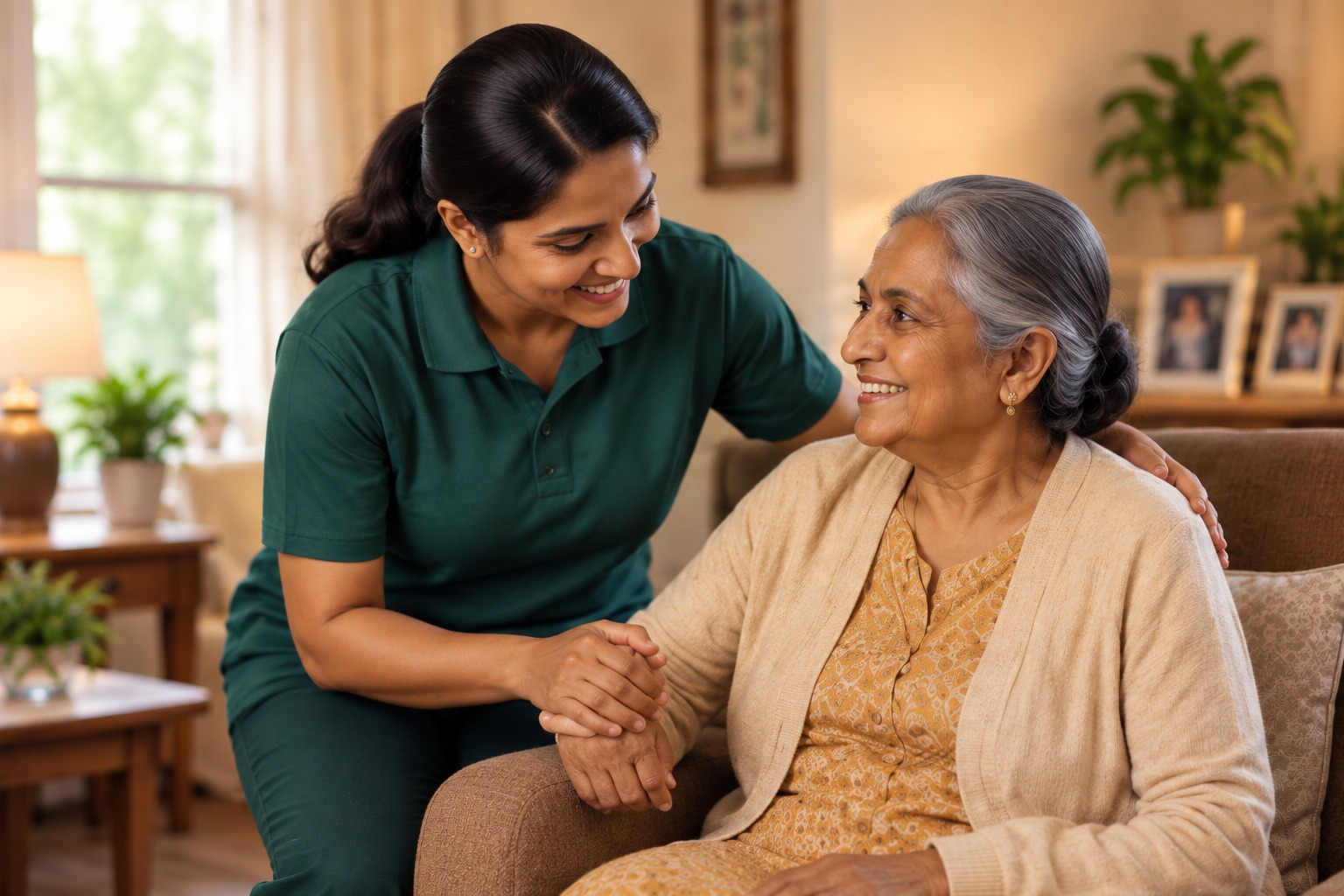
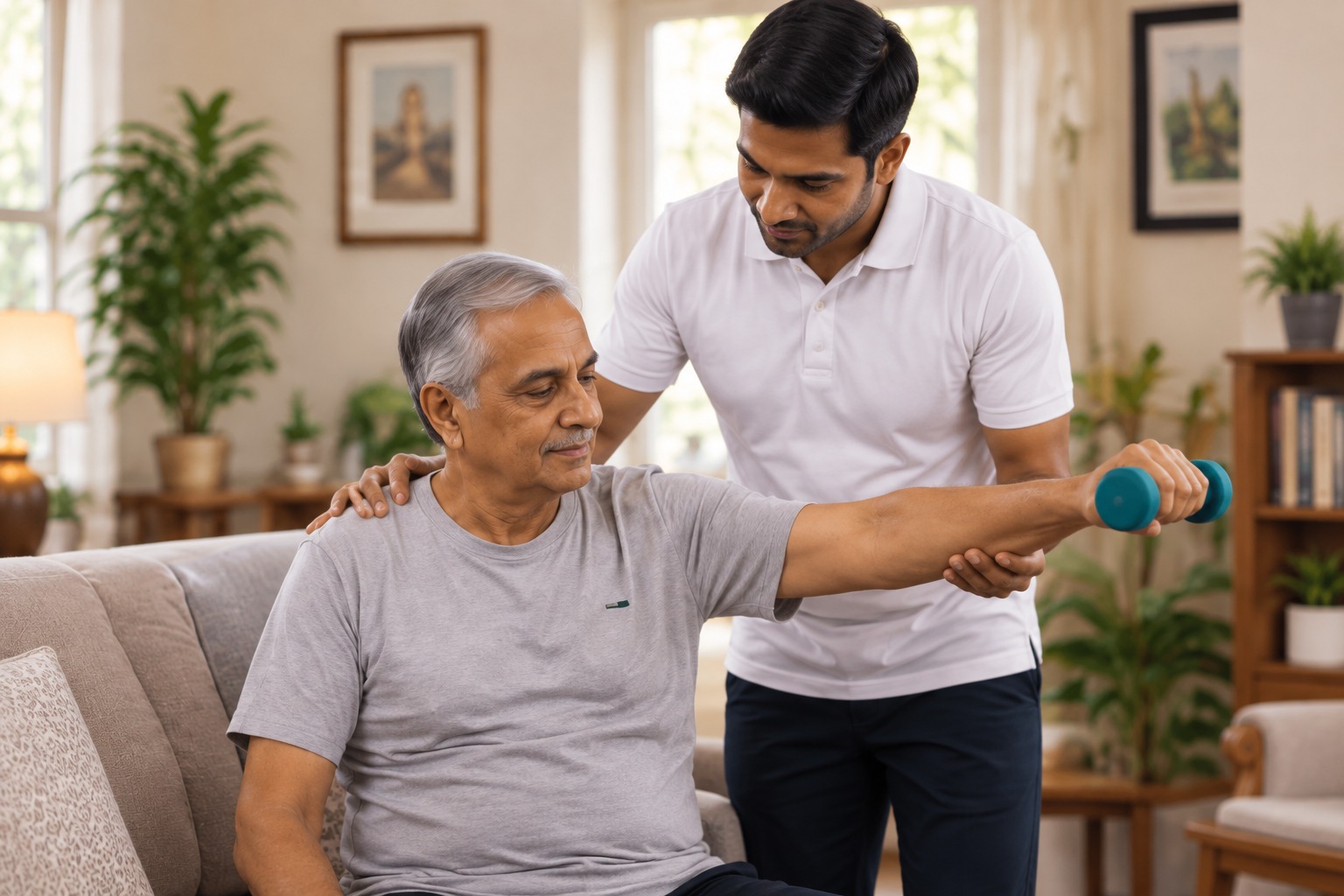
Doctor examining a patient during a home visit

Doctor on call

Doctor Visit at Home

A qualified doctor comes to your home, examines the patient properly, gives a diagnosis and a prescription, and arranges tests or a nurse if they are needed. For fever, infection, elderly parents who cannot travel, and recovery at home.

  • Full examination, not a phone call
  • Prescription written at the visit
  • Blood tests collected at home
  • Nursing arranged on the same prescription

Book a doctor home visit

For an emergency, call an ambulance on 108 rather than filling this in.

Quick answer

What is a doctor visit at home?

A doctor visit at home, also called doctor on call, is a consultation where a qualified doctor comes to the patient's residence instead of the patient travelling to a clinic. The doctor takes a history, examines the patient, checks vitals, reaches a working diagnosis, writes a prescription and arranges blood tests, nursing or a specialist referral where those are needed.

Best for

Fever, infection, elderly parents, recovery at home, bedridden patients

Not for

Emergencies. Chest pain, stroke signs or heavy bleeding need an ambulance

Also called

Doctor on call, home visit doctor, home doctor service, doctor at home

When to call an ambulance instead

A home visit doctor is not an emergency service, and we would rather lose the booking than have you wait for one. If any of the following is happening, stop reading and call an ambulance on 108 or get to the nearest casualty department.

Call an ambulance now

Do not wait for a home visit

  • Chest pain, or pain spreading to the arm or jaw
  • Sudden breathlessness, or blue lips
  • Face drooping, one-sided weakness, slurred speech
  • Unconscious, or very hard to rouse
  • A seizure, or a fit that will not stop
  • Heavy bleeding, a bad fall, or a serious injury
  • A baby or small child who has gone floppy or unresponsive

A home visit is right for

Needs examining, but is not time-critical

  • Fever that has not settled in two or three days
  • Cough, cold, throat and chest infections
  • Stomach upset, vomiting, loose motions
  • An elderly parent who cannot manage the journey
  • A review after a hospital stay or surgery
  • Bedridden patients who cannot reach a clinic
  • Routine check-ups and medication review

If you are unsure which side of that line you are on, ring us and describe what is happening. It costs nothing to ask, and we will tell you straight if the answer is an ambulance rather than us.

How soon a doctor can come, and what you pay

The two things everyone asks in the first minute of the call, so here they are before you have to ask.

How soon

We do not advertise a fixed response time, because it honestly depends on your locality, the hour and which doctors are already out on visits. A number printed on a website is worth nothing to you at 11pm if it cannot be met.

What we do instead: tell us where you are and what is wrong, and you get the earliest slot we can actually hold, on that call. If it is going to be tomorrow morning rather than tonight, you will be told that straight away so you can decide what to do rather than sitting and waiting.

A planned visit, such as a review for an elderly parent, can be booked for a time that suits you.

What it costs

There is a visit fee, and you are told the exact figure on the phone before you confirm anything. Nobody arrives at your door with a number you have not already agreed to.

  • The fee covers the consultation and the prescription
  • Late-night and far-out localities can differ, and you are told which applies
  • Blood tests, medicines and a nurse are separate, and only if you agree to them
  • A follow-up visit is quoted the same way

What happens during the visit

The same consultation you would get in a clinic, without the journey or the waiting room, and with the advantage that the doctor sees how the patient actually lives.

History and examination

  • What started when, and how it has changed
  • Blood pressure, pulse, temperature, oxygen saturation
  • Listening to the chest, examining the abdomen
  • Throat, ears, skin and wounds as relevant

Diagnosis and prescription

  • A working diagnosis explained in plain language
  • A written prescription, the same as in a clinic
  • Existing medicines reviewed for clashes and duplication
  • What to watch for, and when to call back

Tests, if they are needed

  • Blood samples collected at home by a technician
  • Reports sent to you and to the doctor
  • A referral where imaging or a specialist is required
  • Told plainly if the patient should go to a hospital

Care arranged afterwards

  • A nurse for injections, drips or dressings on the same prescription
  • An attendant where daily living has become difficult
  • Physiotherapy where mobility is the problem
  • A follow-up visit if the case needs reviewing

Home visit, video call or clinic?

All three have their place, and the honest answer is that a home visit is not always the right one. It turns mainly on whether the patient actually needs examining.

Comparison of a doctor home visit, a video consultation and a clinic visit
  Home visit Video call Clinic
Physical examinationYesNoYes
Patient has to travelNoNoYes
Doctor sees the homeYes, which often mattersNoNo
Infection risk from waitingNoneNoneA real one for the frail
X-ray, scan, proceduresNo, referral insteadNoUsually available
Best forElderly, bedridden, anyone needing examiningRefills, report review, simple follow-upAnything needing equipment

Doctor home visits for elderly parents

This is the commonest reason families book one. For an elderly parent, a trip to the clinic means stairs, an auto, a waiting room full of coughs and an hour on a hard chair, and quite often the visit gets postponed until whatever it was has become worse.

A home visit also shows the doctor things a consulting room never will. What is actually in the fridge. Whether the bathroom has anything to hold on to. How many medicine strips are open at once, and whether two of them are the same drug under different brand names, which happens constantly when an elderly patient has been seeing several doctors.

Where the visit turns up something that needs ongoing help rather than a prescription, the doctor will say so, and nursing or an attendant can be arranged on the same assessment.

Doctor checking an elderly patient's blood pressure at home

What a doctor can and cannot do at home

A doctor's bag holds a great deal, but not a radiology department. Knowing the line saves a wasted visit.

Can be done at home

During or straight after the visit

  • Full history and physical examination
  • Vitals, including oxygen saturation and sugar
  • Diagnosing and treating common illness
  • Writing and adjusting prescriptions
  • Ordering blood tests with home collection
  • Dressing a minor wound
  • Referring on to a specialist or hospital

Needs a hospital or clinic

The doctor will refer you

  • X-ray, ultrasound, CT or MRI
  • Anything surgical, including stitches of any size
  • Continuous cardiac monitoring or an ECG workup
  • Endoscopy and similar procedures
  • Blood transfusion
  • Any patient who may deteriorate quickly
  • Emergencies, which need an ambulance

Before the doctor arrives

Keep these ready

  • Every medicine strip and box, not a written list. Packets show the exact strength
  • Old prescriptions, discharge summaries, recent reports
  • When the symptoms started and how they have changed
  • Known allergies, and any reaction to a drug before
  • Recent glucometer or BP readings if you take them at home
  • A well-lit place where the patient can be examined lying down

Who we send

A qualified doctor
Credentials verified before any visit is assigned.
Continuity
The same doctor returns for a follow-up wherever the roster allows, because someone who saw the patient before can judge progress properly.
Notes travel with the case
Where a different doctor attends, the previous visit notes and prescription go with them.
Details before arrival
You are told who is coming.

Where we provide doctor home visits

Open your city for local coverage and how booking works there.

Frequently asked questions

What is a doctor visit at home?

A doctor visit at home, also called doctor on call, is a consultation where a qualified doctor comes to the patient's residence instead of the patient travelling to a clinic. The doctor takes a history, examines the patient, checks vitals, reaches a working diagnosis, writes a prescription and arranges blood tests, nursing or a specialist referral where needed. It suits fever and infection, elderly parents who cannot travel, recovery after a hospital stay, bedridden patients and routine check-ups.

Is a home visit doctor an emergency service?

No. If someone has chest pain, sudden breathlessness, weakness or drooping on one side of the face, slurred speech, a seizure, heavy bleeding, a serious injury, or is unconscious or barely responsive, call an ambulance on 108 or go straight to the nearest casualty department. Do not wait for a home visit. A doctor home visit is for illness that needs examining and treating but is not time-critical.

What can a doctor do at home, and what needs a hospital?

At home a doctor can take a history and examine the patient, check blood pressure, pulse, temperature and oxygen saturation, listen to the chest, diagnose common illness, prescribe medicines, order blood tests with home collection, dress a minor wound, adjust long-term medication and refer onward. What needs a hospital is imaging such as X-ray, CT or ultrasound, IV treatment beyond what a nurse can give at home, anything surgical, cardiac monitoring, and any condition where the patient may deteriorate quickly.

Do you provide doctor home visits for elderly parents?

Yes, and it is one of the commonest reasons families book. For an elderly parent a home visit avoids a difficult journey, a waiting room and the risk of picking up an infection there. It also lets the doctor see how the person actually lives, which a clinic never shows: what is in the fridge, whether the bathroom is safe, how many medicine strips are open at once. Medication review matters particularly, because older patients often accumulate prescriptions from several doctors.

What should I keep ready before the doctor arrives?

All current medicine strips and boxes rather than a written list, since packets show the exact strength. Any previous prescriptions, discharge summaries and recent test reports. A note of when the symptoms started and how they have changed. Known allergies. If a glucometer or BP machine is used at home, the recent readings. Clear a well-lit spot where the patient can sit or lie down and be examined.

Can the doctor prescribe medicines and order tests at home?

Yes. The doctor writes a prescription during the visit exactly as they would in a clinic. Blood tests can be arranged with a technician collecting samples at home, and reports follow. Where a nurse is needed for injections, drips or dressings, that can be arranged as a separate booking on the doctor's prescription.

Will the same doctor come for a follow-up?

We keep the same doctor on a case wherever the roster allows, because someone who saw the patient three days ago can judge whether they are improving far better than someone reading notes. Where the same doctor is not available, the visit notes and prescription go with the case so the next doctor is not starting from nothing.

Is a home visit better than a video consultation?

It depends on whether the patient needs examining. A video call is quicker and fine for a prescription refill, a report review or a straightforward follow-up. A home visit is the right choice when someone has to listen to the chest, feel the abdomen, look inside the throat or ears, check a wound, or assess a frail elderly patient properly. A doctor cannot examine anyone through a screen.

Related services

Book a doctor home visit

Tell us what is wrong and where you are. If what you describe needs an ambulance rather than a home visit, we will say so.